Biodiversity Management Committees- A sustainable mechanism for localising SDGs - AIF Skip to content

AIF
  • About Us
    • Mission Vision Values
    • History
    • Impact in Motion
    • Programs at a Glance
    • People
    • Knowledge Center
    • News and Updates
    • Blog
    • Financials
  • Our Work
    • Education
      • Digital Equalizer
      • Learning And Migration Program
    • Livelihoods
      • Ability Based Livelihood Empowerment
      • Market Aligned Skills Training
    • Leadership Development
      • Banyan Impact Fellowship
    • Integrated Programs
      • Support Adolescent Health Education & Livelihood Initiative
      • Skilling Nutrition Education and Health
    • Humanitarian Relief
      • AIF COVID-19 Relief Response
      • COVID Rehabilitation Fund
      • The First Million
    • Public Health
      • Maternal And Newborn Survival Initiative
  • Get Involved
    • Explore Our Chapters
    • Join Circle of Hope
    • Become a Young Professional
    • Create a College Chapter
    • Become a Youth Ambassador
    • Become a Corporate Partner
    • Start Your Fundraiser
    • Join a Mission Trip
    • Join an Event
    • AIF Arcade
  • Contact Us
    • Donor Portal
    • Inquiries
    • Careers
  • Ways To Give
    • Light A Lamp
    • Donate Crypto
    • Give Stock
    • Give from DAF
    • Become a Monthly Donor
    • Start a Birthday Fundraiser
    • Leave a Legacy
    • Donate in India
  • Donate Now
    • Give Once
    • Give Monthly
    • Humanitarian Relief
      • Donate to Nepal Flood Relief
      • Donate to Assam Flood Relief
    • Give to the Galas
      • Bay Area Gala
      • New England Gala
      • New York Gala

January 31, 2024

Biodiversity Management Committees- A sustainable mechanism for localising SDGs

Santanu Bhowmick 20 Years of Serve, Learn, Lead

Introduction

In the heart of Chhattisgarh, a state adorned with diverse ecosystems and a vibrant tribal culture, the call for action resonates through the lush landscapes. The mandate for Biodiversity Management Committees (BMCs) stands tall, embedded in the Biological Diversity Act of 2002 and reinforced by the National Green Tribunal’s directives. However, the gap between legislative intent and practical implementation, particularly the involvement of Gram Panchayats and village councils, poses a challenge.
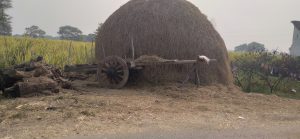
Losing the skills of preparing the bullock cart and the culture of using it for agricultural purposes, Photo credit: Author


Legislative Framework for Biodiversity Conservation

The Biological Diversity Act of 2002, accompanied by rules in 2004, provides a robust legal framework aimed at conserving biodiversity. At the heart of this framework lies the BMCs, envisioned as linchpins for grassroots conservation efforts. These committees, backed by legislative support, play a pivotal role in translating scientific knowledge into local practices and ensuring the safe custody and documentation of the same for future generations. But the question arises: after two decades of the great legislative framework in use, how far has it been followed at the local level? How about the attitude and status of the various stakeholders associated with it? What is the present context of entrusting this committee to safeguard our survival on earth, as the BMC approach is multifaceted and not limited only to environmental resources but much more diverse?

The firing of agriculture residue at the sugarcane field after harvesting, where all the birds nests were badly damaged | Photo Credit: Author


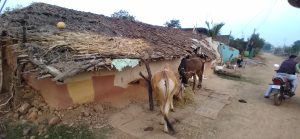
Skills for repairing and making traditional houses are getting lost in the villages | Photo Credit- Author

Role and Functions of BMCs

BMCs are not mere bureaucratic entities; they are integral components of a community-driven conservation strategy. Their primary role involves preparing People’s Biodiversity Registers (PBRs) by consulting local communities about their preservation. These registers document valuable information on bio-resources, their uses, and traditional knowledge, acting as repositories of indigenous wisdom. So, this document can be considered a comprehensive record of different aspects of biodiversity, including the conservation of habitats, the preservation of landraces, domesticated stocks and breeds of animals, and microorganisms, and the accumulation of knowledge related to biodiversity present in an area.
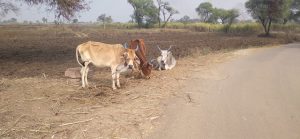
Diminishing local breeds of animals | Photo Credit: Author

In the quiet corners of our villages, a significant change is unfolding as local cattle breeds rapidly make way for foreign counterparts promising more milk and profits. While the allure of higher yields is tempting, these foreign breeds often struggle with the local climate, falling sick regularly, which leads to additional expenditure and burden for the cattle owner.

The new generation may not be able to make these eco-friendly caps produced by using local materials. Photo credit: Author

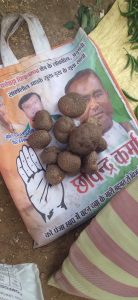
Alongside this, the disappearance of skilled individuals who can repair bullock carts or maintain traditional houses leaves a void in preserving local expertise, and the disappearance of wild local greens and grains rapidly changes the food habits of each individual in the village. Sadly, the younger generation is missing out on inheriting these invaluable skills and lacking enough knowledge to identify valuable local greens and grains that can be used for medicinal and food purposes. In this scenario, Biodiversity Management Committees (BMCs) emerge as beacons of hope at the last mile, which directly connects people. Tasked with conserving biodiversity, BMCs can play a pivotal role in promoting the preservation of native breeds, local natural resources, flora and fauna, and traditional and indigenous skills. By raising awareness, organizing workshops, and fostering community engagement, BMCs can bridge the gap between generations and ensure that the essence of rural life, embedded in local plants, animals, birds, all species, food habits, traditional /indigenous skills, and craftsmanship, continues to thrive for years to come.
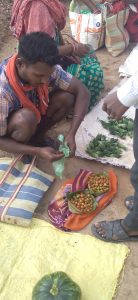
Locally grown food products and traditional ways of selling practices with leaf containers and without using the weighing machine. Photo Credit: Author

Whether the future generation is interested in learning these traditional skills, which are solely dependent on local greens, and taking them forward? Photo credit: Author

Ground Reality and Concerns in Chhattisgarh

Despite the legislative emphasis, the ground reality in Chhattisgarh paints a concerning picture. Most of the BMCs in villages are non-functional or unknown to Gram Panchayats and village councils. It seems that Gram Panchayat officials and elected representatives are not aware of the existence and importance of the committee and the serious disconnect visible between the legislative framework and ground reality.  This disconnect is particularly troubling in a state blessed with unique biodiversity and a significant tribal population, where effective conservation is both relevant and urgent. As a result, local indigenous skills are lost, but they are expected to be transferred to a new generation. Local natural resources are depleting at a faster pace as the concerned local institutions, i.e. Gram Panchayat and BMC, are not focusing on them for their conservation.

The loss of traditional skills of drying fish collected locally and its storage- photo credit: Author

In this context, the most serious concern is that poor and marginalized communities are highly affected due to the loss of local indigenous skills and natural resources, as they depend on these indigenous skills and natural/biological resources for their livelihood and survival. However, modern technology and outside products take their space, and these communities become more vulnerable.

So, empowering local communities is the key to ensuring the functioning of BMC at the grassroots. Tribal communities, often possessing profound traditional knowledge, can be considered leaders in effective conservation. BMCs, with the involvement of Gram Panchayats and village councils, can harness this indigenous wisdom to formulate effective conservation strategies. The documentation of tribal practices in PBRs becomes crucial for preserving unique insights and integrating traditional knowledge into modern conservation efforts.

Towards Sustainable Development Goals
In the global context of achieving sustainable development goals (SDGs) and growing concerns about environmental degradation, BMCs can play a major role in protecting biodiversity and cultural heritage. The involvement of local government institutions ensures a localized approach, connecting with the grassroots for effective biodiversity management.

The Way Forward
To bridge the existing gap and revitalize BMCs in Chhattisgarh, a multipronged approach is essential. So, collective responsibility at the grassroots from various local-level institutions can be considered the key to the empowerment of local communities and BMC. Therefore, local institutions like Self Help Groups (SHGs), youth clubs, Pani Samiti, Market committees, religious committees, Joint Forest Management Committees, Cooperatives, Farmers forums/committees, and all others can act together to achieve the goals of empowering BMC and communities for the protection of their own biodiversity heritage.

An extensive awareness campaign is needed to educate Gram Panchayats, village councils, BMCs, and local communities about the critical role of BMCs and the preparation of PBRs. Empowering these local bodies with knowledge and tools through training programs and workshops is equally vital.  In the same direction, the role of youth and the active participation of the new generation are very much required to ensure the protection of our biodiversity heritage and traditional skills and expertise in any form.

Conclusion
The journey toward effective biodiversity conservation in Chhattisgarh hinges on the active participation of BMCs, Gram Panchayats, village councils, and local communities, especially the young generation. The synergy between legal mandates and grassroots involvement will not only bridge the existing gap but also pave the way for a more sustainable and community-centric approach to biodiversity management. This, in essence, is the localization of sustainable development goals, ensuring a better future for rural India and its communities dependent on biodiversity and natural resources.

References:

Biological Diversity Act, 2002 and Rules 2004

National Green Tribunal Directives

Chhattisgarh State Biodiversity Board, Forest Department, Government of Chhattisgarh, website (https://www.cgsbb.in/)

Author

  • Santanu Bhowmick
    Santanu Bhowmick

    Mr. Santanu Bhowmick has completed his Post Graduation in Local Governance from Rajiv Gandhi National Institute of Youth Development (RGNIYD). Mr. Santanu comes with rich diverse experience as he has worked in the development sector with various NGOs and CSR bodies. He also worked with National Institutions like the National Institute of Rural Development and Panchayati Raj (NIRD&PR) with multiple research projects as Research Associate and Assistant.

    He also worked as a State Resource Associate (SRA) at the Indian Institute of Management Bangalore (IIMB) associated with the Mahatma Gandhi National Fellowship Programme (MGNF) under the aegis of the Ministry of Skill Development and Entrepreneurship in Tripura.

    View all posts
santanu-bhowmick

Mr. Santanu Bhowmick has completed his Post Graduation in Local Governance from Rajiv Gandhi National Institute of Youth Development (RGNIYD). Mr. Santanu comes with rich diverse experience as he has worked in the development sector with various NGOs and CSR bodies. He also worked with National Institutions like the National Institute of Rural Development and Panchayati Raj (NIRD&PR) with multiple research projects as Research Associate and Assistant.

He also worked as a State Resource Associate (SRA) at the Indian Institute of Management Bangalore (IIMB) associated with the Mahatma Gandhi National Fellowship Programme (MGNF) under the aegis of the Ministry of Skill Development and Entrepreneurship in Tripura.

Tags: aif banyan impact fellow, AIF Banyan Impact Fellowship, Biodiversity Management Committee, chattisgarh, conservation, Gram Panchayat

Post navigation

Previous Post Previous
Next PostNext

You Might Also Like

October 16, 2026
Keeping Learning on Track in Migration-Affected Communities
September 03, 2026
Same Mission, Different Ethos
A Day in the Life: Jamshedpur Edition

Blog Categories

  • AIF
  • AIF's Barrier Breakers
  • CEO's Corner
  • Chapters
  • Circle of Hope
  • Education
  • Livelihoods
  • Public Health

Latest Posts

  • Keeping Learning on Track in Migration-Affected Communities
    October 16, 2026
  • Meet Sunita – Livelihoods
    August 24, 2026
  • Meet Sonia – Livelihoods
    August 24, 2026

Support Our Work

Help transform the lives of millions of people in India.

Donate Now  See Your Impact in Motion

Connect With Us

Stay updated on the latest news and help spread the word.

AIF-logo-white-300x99

The American India Foundation is a 501[c][3] organization committed to improving the lives of India’s underserved, with a special focus on women, children, and youth.

DONATE NOW
NEW YORK | CALIFORNIA
  • About Us
    • Mission Vision Values
    • History
    • Impact in Motion
    • Programs at a Glance
    • People
    • Knowledge Center
    • News and Updates
    • Blog
    • Financials
  • Our Work
    • Education
      • Digital Equalizer
      • Learning And Migration Program
    • Livelihoods
      • Ability Based Livelihood Empowerment
      • Market Aligned Skills Training
    • Leadership Development
      • Banyan Impact Fellowship
    • Integrated Programs
      • Support Adolescent Health Education & Livelihood Initiative
      • Skilling Nutrition Education and Health
    • Humanitarian Relief
      • AIF COVID-19 Relief Response
      • COVID Rehabilitation Fund
      • The First Million
    • Public Health
      • Maternal And Newborn Survival Initiative
  • Get Involved
    • Explore Our Chapters
    • Join Circle of Hope
    • Become a Young Professional
    • Create a College Chapter
    • Become a Youth Ambassador
    • Become a Corporate Partner
    • Start Your Fundraiser
    • Join a Mission Trip
    • Join an Event
    • AIF Arcade
  • Ways To Give
    • Light A Lamp
    • Donate Crypto
    • Give Stock
    • Give from DAF
    • Become a Monthly Donor
    • Start a Birthday Fundraiser
    • Leave a Legacy
    • Donate in India
    • Contact Us
      • Donor Portal
      • Inquiries
      • Careers
  • Donate Now
    • Give Once
    • Give Monthly
    • Humanitarian Relief
      • Donate to Nepal Flood Relief
      • Donate to Assam Flood Relief
    • Give to the Galas
      • Bay Area Gala
      • New England Gala
      • New York Gala
charity-navigator
gep-logo
guidestar
non-profit-logo
© Copyright 2000-2026 American India FoundationTM is a 501(c)(3) organization (EIN: 13-4159765)
Privacy Policy
  • PRIVACY
  • COOKIES
  • TERMS
  • PRICING
  • API
  • DATA

Follow us:

Subscribe to newsletter

Become a Fundraiser or Donate to Light a LAMP

Privacy & Cookies Notice
We use cookies and similar technologies to collect information and to personalize the site. By continuing to use this site, you consent to the placement of these cookies and similar technologies and to our privacy practices.

Read our updated Privacy Notice to learn more.
Accept all cookies  Cookie Settings
Manage consent

Privacy Overview

This website uses cookies to improve your experience while you navigate. Out of these, the cookies categorized as necessary are stored on your browser as they are essential for the working of the basic functionalities of the website. We also use third-party cookies that help us analyze and understand how you use this website. These cookies will be stored in your browser only with your consent. You also have the option to opt out of these cookies. But opting out of some of these cookies may affect your browsing experience.
Necessary
Always Enabled
Necessary cookies are absolutely essential for the website to function properly. These cookies ensure basic functionalities and security features of the website, anonymously.
Functional
Functional cookies help to perform certain functionalities like sharing the content of the website on social media platforms, collect feedbacks, and other third-party features.
Performance
Performance cookies are used to understand and analyze the key performance indexes of the website which helps in delivering a better user experience for the visitors.
Analytics
Analytical cookies are used to understand how visitors interact with the website. These cookies help provide information on metrics the number of visitors, bounce rate, traffic source, etc.
Advertisement
Advertisement cookies are used to provide visitors with relevant ads and marketing campaigns. These cookies track visitors across websites and collect information to provide customized ads.
Others
Other uncategorized cookies are those that are being analyzed and have not been classified into a category as yet.
SAVE & ACCEPT
55326088507_cfb3c39d82_z
55327217314_d3170dfbeb_z
55327418330_706ee45295_z
55326999221_dd05aa938f_z
55327215664_316a7e95a3_z
55327159633_e6611a9578_z
55326086597_bf1f2dafc8_z
55327161938_31321a5d4f_z
55327416140_066c9bbe4b_z
55327216419_f1fd1dc9cb_z
55326994101_e3409674c2_z
55327154373_c75309513b_z
55327156008_5e9316ba57_z
55327002316_48cd65ca3b_z
55327217634_4f1bb2d997_z
55327217854_904e0ea6ee_z
55327217139_28151b7ca8_z
55327002721_13df3dba30_z
55327418650_a3eaf0175d_z
55327417775_25a3efe985_z
55327418585_69454371cc_z
55295022115_495c9bc5d8_b
55293699227_1100d34999_z
55294998903_fcf6276958_z (1)
55295257085_4189543693_z
55293699602_a44b8cf1b3_z (1)
55294998823_22b1f4831f_z
55294844896_a81ccb1846_z (1)
55294611521_e14e12d38c_z
55294999178_1357596fb5_c
55294844896_a81ccb1846_z
55293935307_955ab8d3f0_z
55295085929_402beaf049_z
55294844171_327a23d9d0_z
55294843796_7eee300eef_z
55293934807_983306db41_z
55293934922_97490ccb18_z
55294997918_bd68b50a00_z
55295255930_87514247df_z
55294843206_9ee356b6f9_z
55294842516_c20d7c699a_z
55293932587_eb9c10dc05_z
55294841536_5c7842d9f8_z
55295254900_b32dfbd193_z
55294998903_fcf6276958_z
55293699602_a44b8cf1b3_z
55294845186_3b04736eb0_z
55295254255_0b29cda9a9_z

Start Your Collegiate Alliance Today!

Connect with us to learn more, request a fundraising toolkit, and ask questions about forming a collegiate alliance.

Subscribe for the Newsletter

Subscribe

Keep up with the latest AIF news and updates on our programs, events and campaigns

-

Please share the name and email of the person you would like to recommend:

To automatically download the marketing collateral, please share the following details:

Skip to content
Open toolbar Accessibility Tools

Accessibility Tools

  • Increase TextIncrease Text
  • Decrease TextDecrease Text
  • GrayscaleGrayscale
  • High ContrastHigh Contrast
  • Negative ContrastNegative Contrast
  • Links UnderlineLinks Underline
  • Readable FontReadable Font
  • Reset Reset