AIF
  • Home
  • India Service Application
  • US Service Application
  • Senior Fellows Track
  • Meet Our Fellows
  • Alumni Corner
  • Blog
  • Publications
  • Get In Touch
  • FAQ

May 24, 2024

Changing Patterns in the Lives of Farmers: An Introspection from Past, Present, and Future

Santanu Bhowmick 20 Years of Serve, Learn, Lead

Note: The blog is especially focused on the dynamics of the Kabirdham District of Chhattisgarh

Introduction:

Kabirdham District predominantly covers rural areas, where the rhythms of life have long been intertwined with the cycles of the agricultural ecosystem. Over the years, this ecosystem has undergone a deep transformation, shaping the lives of farmers and the landscape they inhabit. While exploring the past, present, and future of farming in this region, we witness a story of resilience, adaptation, and the looming question of sustainability.
As per the Census 2011 conducted by the Registrar General of India, the total number of agricultural workers in the country has increased from 234.1 million (127.3 million cultivators and 106.8 million agricultural laborers) in 2001 to 263.1 million (118.8 million cultivators and 144.3 million agricultural laborers) in 2011. However, the share of the workforce engaged in the agriculture sector (comprising of cultivators and agricultural laborers) has come down from 58.2 per cent in 2001 to 54.6 per cent in 2011.

Problem statement:
With the above information, it is clear that while the total number of agricultural workers has increased, the share of cultivators has declined, giving way to a rise in agricultural laborers. This trend raises pertinent questions about the evolving dynamics of land ownership, economic pressures, and changing agricultural practices.

Perspectives from Kabirdham: Past, Present, and Future
In the not-so-distant past, around 10 years ago, Kabirdham’s farmers epitomized self-reliance, embodying Mahatma Gandhi’s vision of Gram Swaraj, where most farmer families were self-sufficient, relying on the land for sustenance and supplementing their needs from the local market. Traditional methods and indigenous knowledge sustained a way of life deeply rooted in the land along with their cultural heritage. Interacting with senior farmers of Kabirdham revealed that they never depended on the market for rice and pulses. Their produce was sufficient for the whole year, and they used to store paddy for more than 2 years.

Traditional house of a farmer, where cows and oxen were essential as they were integral parts of the agriculture ecosystem | Photo credit: Author

One farmer stressed that he liked the flavor of rice from paddy stored for 1 or 2 years more than rice from freshly harvested paddy.
Fast forward to the present, and we witness a paradigm shift in farming practices. Modern techniques are altering age-old traditions where mechanization has become the norm of the land, with tractors replacing oxen, motor pumps for water replacing traditional wells, and the depletion of all traditional water conservation mechanisms.

Many farmers owned modern agricultural machines | Photo Credit: Author

Farmers now rely on purchasing seeds from the market, abandoning their traditional practice of storing seeds for a year. They opt for chemical fertilizers over homemade organic manure, which includes cow dung, crop residue, and other wet waste. Furthermore, the market-driven approach of government policies has forced them to depend on government storage facilities, even for paddy and other produce that farmers could easily store for at least a year.
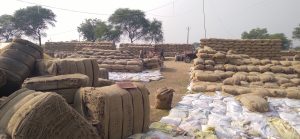
Farmer selling their produce to government on MSP | Photo Credit: Author

The appeal of higher yields, promising Minimum Support Price (MSP) without predetermined standard quality indicators by the Government, and market demand has led to the adoption of monocropping and the erosion of traditional storage methods. Now, Kabirdham district is famous for its sugarcane production besides the production of paddy, but around a decade ago, this same land was very famous for soybean production along with other pulses like black gram, sesame, wheat, etc. Groundwater used to be just 50 to 100 ft below the soil, and farmers used to depended on dug wells. But now, every farmer has installed electric motor-led submersible pumps for irrigation in their farmland, and sometimes the pipes of submersibles need to reach up to 1000 feet to ensure water availability during the dry season. This proves that the exploitation of groundwater is happening at an alarming rate.
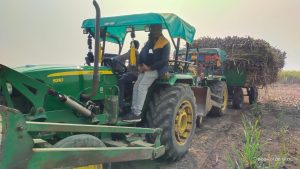
Tractor extensively used by farmers | Photo Credit: Author

Yet, amidst these changes, concerns about sustainability loom over. The over-reliance on chemical inputs, the loss of crop diversity, and the commodification of agriculture raise red flags about the long-term viability of current practices. Farmers find themselves caught in a cycle where short-term gains come at the expense of environmental degradation and loss of control over their produce.

Now, a major focus of a farmer is to increase the production of paddy without concentrating on its quality, where the application of unlimited chemical fertilizers and pest control is a common phenomenon, as farmers rarely consume their own produce, especially rice. They sell all their produce to the government as it provides a high MSP and consume rice received from the government public distribution system free of cost (5 kg per person per month). As one farmer aptly puts it, “We are consuming the poison we apply” as the same paddy is being processed and the same rice is being supplied by the government to the farmers.

Previously, farmers utilized traditional dheki or jatta to extract rice from paddy, where a farmer’s family maybe able to determine the rice’s quality, whether it be brown or white, thin or fat. However, farmers now lament, “Brown rice, once produced at our home, is now sold in the shopping mall at Kawardha” so the entire scenario has shifted.
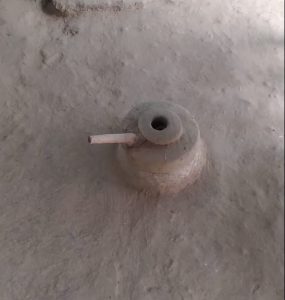
Traditional tools for extraction of pulses and rice | Photo Credit: Author

Agricultural activities yield by-products like crop residue, rice husks, and pulse husks, which were traditionally used as cattle feed. It was common for every farmer to own some cattle, which assisted them in agricultural tasks. However, nowadays, people rely on mechanized holler machines for the extraction of rice and other grains. This means that rice husks or pulse husks may not be readily available to farmers. Additionally, farmers’ families are less inclined to keep cattle at home due to the associated costs but in the past, agriculture and cattle rearing formed an interconnected ecosystem for farmers and villages. However, this cycle is now disrupted and rapidly changing.
The disconnect between production and consumption, exacerbated by government policies and market forces, underscores the need for a holistic approach to farming. Education, awareness, and empowerment are key to equipping farmers with the tools to navigate this evolving landscape.

Bag made from palm leaves | Photo credit: Author

Conclusion:
The path forward demands a reevaluation of priorities and a reconnection with the land and unique cultural heritage. Sustainable agriculture practices, rooted in agroecology and community resilience, offer a beacon of hope. By reclaiming traditional wisdom, embracing innovation, and fostering local autonomy, Kabirdham’s farmers can chart a course towards a more sustainable future. But, the journey ahead is fraught with challenges, but also brimming with opportunities. By bridging the gap between past wisdom and present realities, Kabirdham’s farmers hold the key to unlocking a future where agriculture thrives in harmony with nature, and self-reliance becomes more than just a distant dream—it becomes a living reality.

References:

https://pib.gov.in/PressReleasePage.aspx?PRID=1601902#:~:text=As%20per%20Census%202011%2C%20conducted,144.3%20million%20agricultural%20labourers)%20in

Author

  • Santanu Bhowmick
    Santanu Bhowmick

    Mr. Santanu Bhowmick has completed his Post Graduation in Local Governance from Rajiv Gandhi National Institute of Youth Development (RGNIYD). Mr. Santanu comes with rich diverse experience as he has worked in the development sector with various NGOs and CSR bodies. He also worked with National Institutions like the National Institute of Rural Development and Panchayati Raj (NIRD&PR) with multiple research projects as Research Associate and Assistant.

    He also worked as a State Resource Associate (SRA) at the Indian Institute of Management Bangalore (IIMB) associated with the Mahatma Gandhi National Fellowship Programme (MGNF) under the aegis of the Ministry of Skill Development and Entrepreneurship in Tripura.

    View all posts
santanu-bhowmick

Mr. Santanu Bhowmick has completed his Post Graduation in Local Governance from Rajiv Gandhi National Institute of Youth Development (RGNIYD). Mr. Santanu comes with rich diverse experience as he has worked in the development sector with various NGOs and CSR bodies. He also worked with National Institutions like the National Institute of Rural Development and Panchayati Raj (NIRD&PR) with multiple research projects as Research Associate and Assistant.

He also worked as a State Resource Associate (SRA) at the Indian Institute of Management Bangalore (IIMB) associated with the Mahatma Gandhi National Fellowship Programme (MGNF) under the aegis of the Ministry of Skill Development and Entrepreneurship in Tripura.

Tags: Agriculture ecosystem, farmer, Livelihood

Post navigation

Previous Post Previous
Next PostNext

You Might Also Like

October 16, 2026
Keeping Learning on Track in Migration-Affected Communities
September 03, 2026
Same Mission, Different Ethos
A Day in the Life: Jamshedpur Edition

Latest Posts

  • Same Mission, Different Ethos
    September 3, 2026
  • A Day in the Life: Jamshedpur Edition
    September 3, 2026
  • What Is the Role of Life Skills Education?
    September 2, 2026

Follow Us

Stay up to date on the latest news and help spread the word.

Support Our Work

Help transform the lives of millions of people in India.

Donate Now  See Your Impact in Motion
AIF-logo-white-300x99

The American India Foundation is a 501[c][3] organization committed to improving the lives of India’s underserved, with a special focus on women, children, and youth.

DONATE NOW
NEW YORK | CALIFORNIA
  • About Us
    • Mission Vision Values
    • History
    • Impact in Motion
    • Programs at a Glance
    • People
    • Knowledge Center
    • News and Updates
    • Blog
    • Financials
  • Our Work
    • Education
      • Digital Equalizer
      • Learning And Migration Program
    • Livelihoods
      • Ability Based Livelihood Empowerment
      • Market Aligned Skills Training
    • Leadership Development
      • Banyan Impact Fellowship
    • Integrated Programs
      • Support Adolescent Health Education & Livelihood Initiative
      • Skilling Nutrition Education and Health
    • Humanitarian Relief
      • AIF COVID-19 Relief Response
      • COVID Rehabilitation Fund
      • The First Million
    • Public Health
      • Maternal And Newborn Survival Initiative
  • Get Involved
    • Explore Our Chapters
    • Join Circle of Hope
    • Become a Young Professional
    • Create a College Chapter
    • Become a Youth Ambassador
    • Become a Corporate Partner
    • Start Your Fundraiser
    • Join a Mission Trip
    • Join an Event
    • AIF Arcade
  • Ways To Give
    • Light A Lamp
    • Donate Crypto
    • Give Stock
    • Give from DAF
    • Become a Monthly Donor
    • Start a Birthday Fundraiser
    • Leave a Legacy
    • Donate in India
    • Contact Us
      • Donor Portal
      • Inquiries
      • Careers
  • Donate Now
    • Give Once
    • Give Monthly
    • Humanitarian Relief
      • Donate to Nepal Flood Relief
      • Donate to Assam Flood Relief
    • Give to the Galas
      • Bay Area Gala
      • New England Gala
      • New York Gala
charity-navigator
gep-logo
guidestar
non-profit-logo
© Copyright 2000-2026 American India FoundationTM is a 501(c)(3) organization (EIN: 13-4159765)
Privacy Policy
  • PRIVACY
  • COOKIES
  • TERMS
  • PRICING
  • API
  • DATA

Follow us:

Subscribe to newsletter

Become a Fundraiser or Donate to Light a LAMP

Privacy & Cookies Notice
We use cookies and similar technologies to collect information and to personalize the site. By continuing to use this site, you consent to the placement of these cookies and similar technologies and to our privacy practices.

Read our updated Privacy Notice to learn more.
Accept all cookies  Cookie Settings
Manage consent

Privacy Overview

This website uses cookies to improve your experience while you navigate. Out of these, the cookies categorized as necessary are stored on your browser as they are essential for the working of the basic functionalities of the website. We also use third-party cookies that help us analyze and understand how you use this website. These cookies will be stored in your browser only with your consent. You also have the option to opt out of these cookies. But opting out of some of these cookies may affect your browsing experience.
Necessary
Always Enabled
Necessary cookies are absolutely essential for the website to function properly. These cookies ensure basic functionalities and security features of the website, anonymously.
Functional
Functional cookies help to perform certain functionalities like sharing the content of the website on social media platforms, collect feedbacks, and other third-party features.
Performance
Performance cookies are used to understand and analyze the key performance indexes of the website which helps in delivering a better user experience for the visitors.
Analytics
Analytical cookies are used to understand how visitors interact with the website. These cookies help provide information on metrics the number of visitors, bounce rate, traffic source, etc.
Advertisement
Advertisement cookies are used to provide visitors with relevant ads and marketing campaigns. These cookies track visitors across websites and collect information to provide customized ads.
Others
Other uncategorized cookies are those that are being analyzed and have not been classified into a category as yet.
SAVE & ACCEPT
55326088507_cfb3c39d82_z
55327217314_d3170dfbeb_z
55327418330_706ee45295_z
55326999221_dd05aa938f_z
55327215664_316a7e95a3_z
55327159633_e6611a9578_z
55326086597_bf1f2dafc8_z
55327161938_31321a5d4f_z
55327416140_066c9bbe4b_z
55327216419_f1fd1dc9cb_z
55326994101_e3409674c2_z
55327154373_c75309513b_z
55327156008_5e9316ba57_z
55327002316_48cd65ca3b_z
55327217634_4f1bb2d997_z
55327217854_904e0ea6ee_z
55327217139_28151b7ca8_z
55327002721_13df3dba30_z
55327418650_a3eaf0175d_z
55327417775_25a3efe985_z
55327418585_69454371cc_z
55295022115_495c9bc5d8_b
55293699227_1100d34999_z
55294998903_fcf6276958_z (1)
55295257085_4189543693_z
55293699602_a44b8cf1b3_z (1)
55294998823_22b1f4831f_z
55294844896_a81ccb1846_z (1)
55294611521_e14e12d38c_z
55294999178_1357596fb5_c
55294844896_a81ccb1846_z
55293935307_955ab8d3f0_z
55295085929_402beaf049_z
55294844171_327a23d9d0_z
55294843796_7eee300eef_z
55293934807_983306db41_z
55293934922_97490ccb18_z
55294997918_bd68b50a00_z
55295255930_87514247df_z
55294843206_9ee356b6f9_z
55294842516_c20d7c699a_z
55293932587_eb9c10dc05_z
55294841536_5c7842d9f8_z
55295254900_b32dfbd193_z
55294998903_fcf6276958_z
55293699602_a44b8cf1b3_z
55294845186_3b04736eb0_z
55295254255_0b29cda9a9_z

Start Your Collegiate Alliance Today!

Connect with us to learn more, request a fundraising toolkit, and ask questions about forming a collegiate alliance.

Subscribe for the Newsletter

Subscribe

Keep up with the latest AIF news and updates on our programs, events and campaigns

-

Please share the name and email of the person you would like to recommend:

To automatically download the marketing collateral, please share the following details:

Skip to content
Open toolbar Accessibility Tools

Accessibility Tools

  • Increase TextIncrease Text
  • Decrease TextDecrease Text
  • GrayscaleGrayscale
  • High ContrastHigh Contrast
  • Negative ContrastNegative Contrast
  • Links UnderlineLinks Underline
  • Readable FontReadable Font
  • Reset Reset