In Northern Gujarat’s Rampura village soil salinity levels are hindering crop growth and threatening rural livelihoods. Local communities focused on sustaining their future in their home, Rampura, are holding tight to land that is still agriculturally viable.
Rampura’s Conundrum
Gujarat has long been a place where agriculture has flourished. The state was a leader in the Green Revolution in India. Sixty-three percent of Gujarat’s total population depends on livelihoods in agriculture and Gujarat has experienced agriculture growth rates well above the national average (Gujarat State Government Portal, 2020).

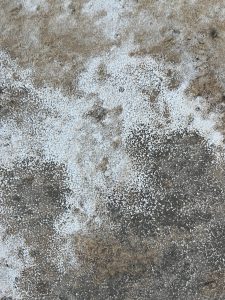
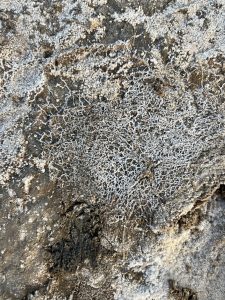
That being said, Gujarat is not without its vulnerabilities. Increasing soil and groundwater salinity is threatening ecologies that underpin rural livelihoods. Salt-affected soil is undesirable for agriculture and allied sectors because it reduces efficiency of crops and can even prohibit vegetation growth.
Rampura is a village located in the easternmost block of the Patan district in North Gujarat. This situates the village south of the Great Rann of Kutch (GRK) and north of the Little Rann of Kutch (LRK). Both the GRK as well as the LRK are salt marshes. These salt marshes are the remnants of an ancient sea floor that has since dried up and become a dryland ecosystem with seasonal flooding. Because of Rampura’s proximity to the GRK and the LRK, it is at greater risk of suffering from salt-affected soil. Rampura’s proximity to saline sea water is another geographical factor that threatens agriculture in the area.
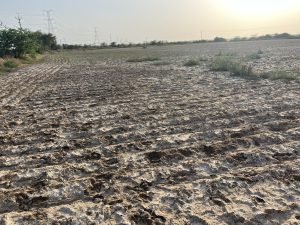
Rampura’s issues of increasing soil salinity are not simply the product of the natural geological features that surround it. To rub salt on the wound of this salinity-afflicted village, factors such as intensive agriculture and climate change are major drivers of increase in soil and groundwater salinity. In fact, the Patan district, in which Rampura is located, is considered ‘high priority based on climate change risk in agriculture’ during the 29 year period from 2020 to 2049 (Rao et al., 2019).
Intensive Agriculture & Salinization
Rampura’s agricultural activity is dependent on precipitation and irrigation to provide water to crops. The region experiences relatively little precipitation and rainfall generally only comes during the monsoon season typically from late June to September. The rest of the year is typically quite dry. During seasonal dry periods farmers must rely on water from irrigation. In Rampura, irrigation comes from bore wells located on agricultural land. Bore wells draw groundwater up from the aquifer and waters a farmer’s field.

The use of irrigated groundwater from bore wells is quite intensive due to the intensive agriculture that farmers pursue to meet market demand and earn a living. When groundwater is used intensively in this way, aquifer water levels run low. Low water levels in aquifers then cause water scarcity. Furthermore, aquifers with low water levels become vulnerable to salt water ingress from saline aquifers in the surrounding GRK and LRK regions as well as sea water ingress from the coast located nearby.
When sea water or relatively more saline water penetrates a freshwater aquifer and is then used in irrigation, it then distributes salt onto top soil and therefore degrades productive and healthy soil. This problem is exacerbated by Rampura’s arid environment. Evaporation of soil moisture happens rapidly in places with high aridity, like Rampura. In places that are not as arid, irrigated, salinity-affected water drains through the ground and back into the aquifer and can leech salt back out of the soil. However in Rampura, irrigated, salinity-affected water evaporates into the atmosphere and leaves salt in the soil, thereby degrading soil in agricultural land.
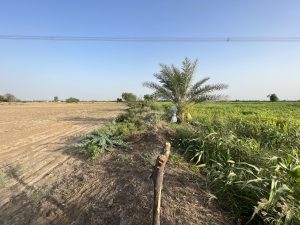
Irrigation and rainfall can also push salt out of a given field and into adjacent fields rendering them useless for agriculture. To make one piece of land efficient farmers must forfeit other arable land – which is less than ideal.
Apart from irrigation, the application of chemical fertilizers and chemical pesticides leads to salinization of soils. Chemical fertilizer solutions contain toxic salts. Use of chemical fertilizers and pesticides distributes salts onto agricultural land furthering the salinization of soil. This is presently the case in Rampura and beyond.
Impacts of Climate Change & Salinization
Climate change is causing temperature change that affects earth’s water cycle from precipitation patterns to sea-level to evaporation rates.
According to the Indian government’s National Innovations in Climate Resilient Agriculture, the Patan district is experiencing a six to nine percent change in annual rainfall as compared to the 1976 to 2005 period (Rao et al., 2019). Change in precipitation in Patan will be accompanied by increased torrential and erratic rainfall. In drylands one may be led to believe that any rainfall is welcome rainfall. However, this is not the case in Rampura.

Torrential rain poses a problem because it delivers too much water to be processed by the soil. Soil becomes absolutely saturated with water so that additional rainfall cannot be properly absorbed by the soil to percolate into the aquifer. Without water percolation into the aquifer, salt cannot be leached out of the soil with the water. Salt left behind then settles at the crop root level and affects crop efficiency and ultimately yield and farmer income.
Subsequently, if water from rainfall cannot percolate into the aquifer it instead runs off the land. Without freshwater percolation into the aquifer, the aquifer becomes vulnerable to ingress of saline water from neighboring aquifers as well as saline sea water ingress. This causes usable water scarcity and any irrigation using salinity-affected groundwater will only result in further distribution of salt into the root-level soil. Rainwater runoff can also leach salt from a salinity-affected wasteland into arable farmlands.
Erratic rainfall patterns will also increase Rampura’s drought proneness and increase the depletion of fresh groundwater thereby inviting even more saline water ingress.
A well-known impact of climate change includes rising sea-levels. Global average temperature increase affects sea-levels via two unique processes. First, the more obvious of the two, ice sheets located at earth’s poles sitting on Greenland in the arctic and on Antarctica in the antarctic are melting rapidly causing sea-levels to rise. Second, an increase in global average temperature is causing the water in the oceans to expand. Water expansion on a planetary scale this can cause notable sea-level rise. Higher sea-levels will allow more saline sea water to ingress into historically freshwater aquifers. Rampura’s present proximity to the sea makes it especially vulnerable to salinization due to sea level rise.
Finally, the process of evaporation and its effect on soil and groundwater salinity as explained briefly above is being expedited due to higher temperatures attributed to an increase in the global average temperature.

The Present and Future of Agriculture in Rampura
Locals belonging to Rampura and the larger Santalpur block are well aware that agricultural livelihoods in the area are facing an existential crisis. Elders and community leaders have shared their observations about the changes and challenges that have arisen due to increasing soil and groundwater salinity.
Krishan Gambheersingh Jadeja Ji, chairman of the local Banas Farmer Producer Organization (FPO) whose geographical scope includes Rampura, conveyed a worrying observation:
“Ten years ago we could grow anything in our fields. Today we are only able to grow certain crops like cumin. In ten more years we won’t be able to grow anything at all.”
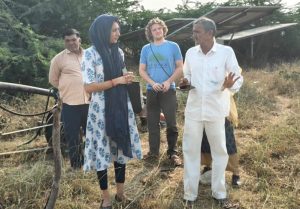
To remedy water scarcity certain farmers have dug bore wells only to find nothing but saline water. Valuable time and money is wasted for farmers hoping to find new sources of fresh groundwater.
Some local young people have decided to leave a future in agriculture all together opting to find work in bigger cities like Mumbai. Urban centers like Mumbai and Ahmedabad have already experienced population pressure and larger scale migration due to climate change challenges in agriculture like increasing salinity will only worsen this trend. Fewer people engaged in agriculture and moving to urban centers could also lead to food shortages that India can little afford as the country’s population skyrockets and climate change forges forward.
However, not all is lost in Rampura. In my field work in Rampura, along with the Centre for Environment Education (CEE) Climate Change team, I have had inspiring conversations with farmers who have substantiated hope that agricultural and allied sector livelihoods can be sustained.
During my project I have been working with farmers and CEE to learn about indigenous technologies and techniques and integrate them into innovative agricultural practices to achieve soil desalination.
One notable idea that farmers have shared with the CEE team is a shift in commercial cropping patterns to more climate resilient crops. For example, many farmers grow a small number of date palm trees on a subsistence basis. These date palm trees handle hot and arid environments like that of Rampura very well. Even better, they can grow efficiently in salinity-affected soil. The idea is that farmers can take advantage of date palm’s resilience and ability to grow in salinity-affected soils and grow date palm on a commercial scale.

Babu bhai Thakore, a farmer belonging to Rampura and a Banas FPO leader contributes some fascinating knowledge about the potential of date palm to sustain agricultural livelihoods in Rampura:
“When soil is saline, the taste and sweetness of date palm increases.”
Dates from date palm are also relatively expensive fruits and the commercialization of this fruit can enhance the incomes of farmers that embrace its cultivation.
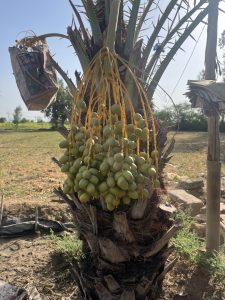
Working with farmers on solutions such as the commercialization of date palm farming in Rampura may just prove that climate resilience can be built well enough to sustain agricultural and allied sector livelihoods well into the future.
Rampura may be a relatively small village but it is important that one doesn’t take its challenges as well as its solutions with a grain of salt. Rampura’s struggle with soil salinity is representative of the many rural economies across India that are vulnerable to encroaching salinity and other environmental concerns associated with rapid climate change.
References
Gujarat State Government Portal. “Agriculture Products & Initiatives.” Government of Gujarat, Gujarat, 2020, https://gujaratindia.gov.in/initiatives/agri-project-and-initative-guj-coc.htm. Accessed 8 July 2024.
Rao, R. et al. “Risk and Vulnerability Assessment of Indian Agriculture to Climate Change.” National Innovations in Climate Resilient Agriculture, ICAR, Hyderabad, 2019, http://www.nicra-icar.in/nicrarevised/images/publications/Risk%20&%20vulnerability%20assessment%20of%20Indian%20agriculture%20to%20climate%20change.pdf. Accessed 3 January 2024.