Fellow’s Journey and Indigenous Knowledge:
While interacting with the agricultural community and during fieldwork, it came to my mind how farmers used to predict the weather status in advance so that they can plan for their agricultural activities early when they didn’t have any access to modern systems. Farmers used to follow certain beliefs that helped them to predict weather conditions and these beliefs became indigenous knowledge for them, and they learnt these from their parents and forefathers. Hence, their learning is a consolidation of generational experience.
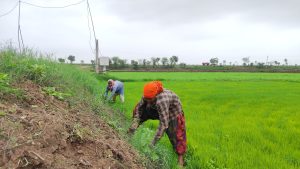
Youth lack awareness of the contextual background and concept of Indigenous knowledge as this knowledge is not being transferred to them from their parents. So, there is a vacuum or knowledge gap that may lead to intergenerational knowledge poverty among the future generations. As part of my Fellowship, I attempted to document some of these beliefs based on the interaction with elder farmers from 10 villages covering Kawardha and Pandariya Block under Kabirdham District of Chhattisgarh.
The role of indigenous knowledge and beliefs in sustainable agriculture is invaluable, but there is no system to document and disseminate this knowledge so that the new generation get access to it. Involving youth in harnessing this knowledge is essential for building resilient and thriving agricultural systems. By recognizing the importance of traditional practices, promoting intergenerational learning, and empowering young farmers as agents of change, communities can create a more sustainable future for agriculture and rural livelihoods.
Some of the Local Beliefs cum Knowledge or Indigenous Practices Related to Weather Forecasting have been noted as follows:
Experience of Village Pandit, their calculations and the reference of Panchangam:
Traditionally, farmers consulted the village Pandit (priest) to gather insights about weather conditions, including predictions about rainfall and auspicious times for agricultural activities. The village Pandit used the Hindu calendar called Panchangam for these predictions, often referring to the positions of the Sun, Moon, and various stars, as well as drawing from multiple Panchangs and their decade-old experiences.
Migratory Birds:
The presence of migratory birds often brought messages of impending rain but in recent times, these migratory birds are not visiting in the numbers they used to. A sudden change in the movement pattern of cattle egrets (known locally as Kokra Bokhla), such as flying alongside cows or above oxen during ploughing, indicated a high likelihood of rainfall. The arrival of these birds suggested certain changes in the weather status quo of the area.
Dragon Insects (Furfundi):
The sight of Furfundi, or dragon insects, flying as a swarm close to the ground and being easily caught by hand suggested imminent rainfall. Conversely, if these insects flew higher in the sky or at eye level, the chances of rain were lower. This behaviour was linked to humidity levels, with the insects coming closer to the ground as humidity approached saturation.
Termite Insects:
Termite insects flying in a row during the evening indicated rain. This phenomenon also occurred when humidity levels were increasing towards saturation.
Experienced Elders’ Observations:
Experienced elders in the village could predict rain by observing various changes in the weather, such as the direction of the wind, morning clouds, the movement of clouds at a distance, evening thunder, and different atmospheric conditions throughout the day.
Goalin Insects:
Villagers observed Goalin insects, particularly noting their size. Smaller insects suggested less rain, while larger ones indicated the possibility of heavy rainfall.
The behaviour of Ants:
The behaviour of ants, such as carrying their eggs in a queue from lower to upper areas or climbing trees with food in their mouths, signified the likelihood of rainfall. Ants, expecting rain, ensured the safety of their eggs and food, and their movement patterns could be used to predict rain.
Behaviour of Sparrows (Babhmon Bird):
Sparrows bathing in small water sources on the ground suggested heavy rainfall lasting more than 24 hours. This behaviour was linked to the saturation of humidity levels, as birds could not tolerate the heat and would bathe to cool down.
Birds Bathing in Dust:
Birds bathing in dust also indicated the likelihood of rain. During dry weather and heat, birds would lose plumage in their feathers, and dust bathing helped them maintain plumage, aiding in flight. This behaviour, driven by extreme heat, suggested rain was coming.
Kingfishers’ Nesting Locations:
The location of nests built by birds like kingfishers near the bund area of ponds or wells could indicate the quantity of rainfall. When birds built nests on the lower side of a pond, it indicated that the water level might not reach the nest due to deficient rain. Conversely, nests built on the upper side of a pond suggested a good amount of rain.
Conclusion
These indigenous practices and beliefs have been passed down through generations, providing valuable insights into weather patterns and aiding in agricultural planning. By involving youth in preserving and utilizing this knowledge, we can foster sustainable agricultural practices and build resilient rural communities. Embracing these traditional methods alongside modern technologies can enhance the accuracy of weather predictions and contribute to more sustainable farming practices, ensuring food security and the well-being of rural livelihoods.
Acknowledgements:
Farmers of the Kabirdham District of Chhattisgarh
References:
- N Anandaraja*, T. R. (2008). indigenous weather and forecast practices of Coimbatore district farmers. Indian Journal of Traditional Knowledge.
- SHANTAPPA DUTTARGANVI1, G. S. (2001). Weather prediction through indigenous knowledge and relevance in agriculture education : A review. . Farm Sci. Spl. Issue, 34(5): (553-557).


