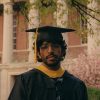
As someone who has straddled disciplines during my undergraduate education, dabbling in STEM, social sciences, and the arts, I always felt like I knew a little bit of everything, but I struggled to find the commonalities in what I had studied. I graduated with a degree in Public Health and Anthropology, both fields that often leave the average passerby confused about what exactly I studied.
I never thought of myself as someone who could fit into a neat box, and yet I did not want this lack of easy definition to mean a lack of structure altogether. My endeavor as an independent researcher, studying the social life of streets in Delhi, added even more confusion—both internally and externally—as to what my professional identity is. My friends have lovingly referred to me as an academic khichdi, a North Indian dish made of lentils, rice, and pulses, used as a metaphor for a mélange of multiple components coalesced into one. I see this Fellowship journey as one where I integrate my various experiences, seeing myself not as discrete units of experience—the lentils, rice, and pulses—but rather as a complex whole: the khichdi.
My khichdi, despite its many ingredients, is oriented toward the service of communities, to help create a world where our needs are met, and we are free to dream, create, and take part in the joy of living. This service toward collective agency is the thread I hope to weave through my career. From understanding barriers to accessing healthy foods through work I did on food swamps during my undergraduate years to learning how modern transportation norms have taken away the street as a public space in Delhi, or my current placement at FES as part of AIF Fellowship on common property rights enabling communities to make a living off their common lands, my career has always revolved around community well-being. I applied to the AIF Fellowship as a transitory step, one where I can integrate my education and research background with practical experience to “weave the thread” or “serve the khichdi,” so to speak.
Yet, the background that led me to apply for the Fellowship sometimes feels like a burden. My first week at my Host organization, FES, was filled with uncertainty. It was a time when I had to learn as much as I could about the host organization by reading annual reports, memorandums of understanding (MOUs), recommended readings, and works by scholars like Vandana Shiva and Akhil Gupta to build an understanding of a field in which I had little prior experience. Initially, the reading materials gave me a sense of confidence—I could grasp the HO’s work on gender constructs, social organization, post-colonial development, and the relationship between political economy and land. Yet, I felt as though my broad understanding of the organization’s target areas did not translate into a specific role. In an organization where everyone seemed to have a clear place, I felt lost.
My peers had a heavier focus on quantitative data, often in more specific fields. My team consisted of ecologists, economists, and data scientists, which left me questioning the need for my skills in qualitative research, despite years of experience with this tool. It wasn’t intentional, but there seems to be a general global attitude that disciplines outside of STEM are seen as frivolous, with a perception that they provide no direct productive value. I went from being confident about my role to suddenly doubting my place. My background in Public Health and Anthropology seemed interesting to my colleagues, but I wondered: what productive value could those skills add to an ecology-focused NGO? When I mentioned Anthropology, a few colleagues asked if I studied skulls, reflecting a bygone understanding of the field. My explanation—that it is the study of human cultures and the systems we organize our society around—cleared up some confusion but still created a sense that I was both too niche and too general to fit neatly into a specific box.

A general difference in academic culture between the U.S. and India is the freedom to customize one’s course of study. The freedom to “major” and “minor” and to try classes outside one’s discipline is a privilege for those attending certain private universities. This often leads to confusion surrounding interdisciplinary backgrounds. There is also an expectation of having a master’s degree to work in positions at our Host Organization. From my conversations with coworkers, many have had to make deliberate switches in their career paths to transition fields. This opportunity to dip your fingers into many bowls, so to speak, is a rare privilege—being able to try something new without formal qualifications seems uncommon in the ecology and development sector.
It feels slightly uncomfortable knowing you aren’t the most qualified for the position you occupy and having to figure out your role in a place that is hierarchical. How was I able to skip ahead? It makes you critically engage with the role of a Fellow; it is supposed to be uncomfortable. You may be forced to carve a niche for yourself that you’ve never had to carve before. Getting through these first few weeks of uncertainty was only possible by holding onto the idea that this Fellowship is meant to unlock what we feel we are capable of—to free us from the burden of expertise, forcing us to question, learn, and grow.
Here’s to hoping that a year from now, we feel confident yet humble as we step into the uncomfortable new situations life will place us in. It is okay to not know where you fit in just yet. Just breathe, let time take its course, get to know yourself, and even sit with the possibility that you may not be fully qualified—but recognize that this is an opportunity to become qualified and to realize that we are so much more capable than we imagine. Weaving the thread between who you were and who you want to be requires the discomfort of figuring out who you are now.