Artiste uses music to bridge cultural and social distances
TribuneIndia
Amritsar, April 20
He is an emcee, an international hip-hop artiste and a musician. But, Mandeep Sethi likes to call himself a storyteller, for he tries to use his talent and means to cover cultural and social distances by educating the youth about the circumstances, in which we are living in, while resonating ancient indigenous cultures within them, revealing the god in all of us.
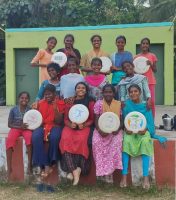
His fetish for music and social change has brought the California-based and LA bred artiste to Amritsar. Performing under the aegis of the American Indian foundation (AIF) and their Our Family, Our Neighborhood, Our world (O3) project, Mandeep gave a scintillating tw0- hour performances along with the local folk artistes and children from various schools at the Art Gallery. Mandeep has been conducting a workshop with these kids from rural and city wide schools for the past five days.
“As a Punjabi who was born and bred in LA, I would say that my culture is hip-hop or the street music and my heritage is Punjabi. With such initiatives, I try to blend in the culture and heritage pf Punjab and take a humanitarian stand for peace and global harmony,” says the artiste. Confessing that he has not been exposed to all the culture nit bits of Punjabis, being part of this initiative is a two-way exchange for him. “It has been more than a learning experience as I got to know so much about the Punjabi folk music from the local artistes,” he said.
The artiste has performed gigs at various international platforms and was also featured in MTV Coke Studio jamming with artistes Shilpa Rao, Benny Dayal, Shruti Pathak, Salim Merchant and music producer Karsh kale. However, dealing with a bunch of kids, training them with nuances of street and R&B music proved to be quite handful to this young man. ‘With some of these kids exposed to the commercial bollywood type hip-hop music, it was a bit hard to explain the technicalities involved in the hip-hop. But I related it to the Punjabi folk as DJ being the same as a dholi and the break dancers being same as bhangra dancers,” he says.
He says, “Most people perceive it as a violent, obscene and rebellious music, but the reality is quite different. It’s music of struggle. Young artistes in the US are creating powerful music. Even big labels and music companies too are using this power to influence the youth,” says Sethi, who is also a member of the universal organisation of street music.
He agrees that most of this limited and negative knowledge about street and hip-hop music in Punjabis has been credited to some Punjabi artistes, who are spreading negative image about it. “I have heard some of the popular Punjabi artistes who are creating music irresponsibly,” he said.