The realities of childhood in India have changed significantly over the years. Today’s children are growing up in an environment that is far more complex, fast-paced, and demanding than ever before. Academic pressure has increased to a level where performance often defines a child’s self-worth. Alongside this, the rise of digital exposure has brought screen addiction and constant comparison through social media into children’s everyday lives. Family structures are also changing, with migration, nuclear families, and urban isolation becoming more common. Many children are also exposed to difficult situations such as violence, abuse, or neglect, either directly or indirectly. All these factors collectively impact children’s emotional and psychological well-being in deep ways. It is therefore not surprising that anxiety, depression, and behavioural challenges are increasingly being observed among children and adolescents today.
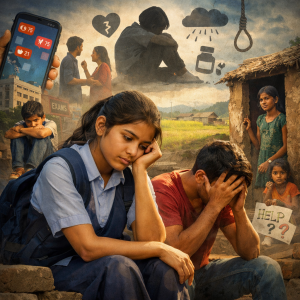 The impact of the COVID-19 pandemic has further intensified these challenges. For many children, the pandemic disrupted the basic rhythm of life. Schools were shut, routines were broken, and social interactions came to a sudden halt. Children were confined to their homes, often with limited opportunities for play, expression, or peer engagement. At the same time, digital dependency increased sharply as education shifted online. This combination of isolation, uncertainty, and excessive screen time has left a lasting emotional impact on children, making the need for mental health and psychosocial support more urgent than ever before.
Another deeply concerning aspect is the rising vulnerability of young people to extreme distress. Suicide has emerged as one of the leading causes of death among youth in India. This is not just a number or a statistic—it reflects the depth of emotional struggles that many children and adolescents are silently going through. It indicates a serious gap in support systems and highlights the urgent need to create safe spaces where children can express themselves and receive timely help.
Urban vs Rural India: Different Contexts, Same Crisis
While the mental health challenges faced by children are widespread, the context varies significantly between urban and rural India. In urban settings, children often grow up in highly competitive environments where academic success and achievement are constantly emphasized. Despite living in crowded cities, many children experience loneliness due to limited meaningful social connections. Digital overload has become a part of daily life, and nuclear family structures sometimes reduce emotional support systems at home. Although mental health services may be more available in cities, stigma and lack of open conversations around emotions often prevent children from seeking help.
In rural India, the situation presents a different set of challenges. Access to mental health professionals and services is extremely limited, making it difficult for children to receive any form of structured support. Awareness about mental health remains low, and emotional struggles are often misunderstood or ignored. Strong social stigma further discourages families from acknowledging or addressing mental health concerns. Additionally, economic stress within families can create an environment where children’s emotional needs are overlooked. As a result, even though the nature of challenges differs from urban areas, the need for mental health and psychosocial support remains equally critical.
 The Role of Schools: The Most Powerful Space
Schools occupy a central place in a child’s life, making them one of the most powerful spaces for addressing mental health. Children spend a significant portion of their time in schools, where they learn, interact, and develop social relationships. This makes schools an ideal platform to identify early signs of emotional distress and provide timely support. When schools consciously create safe and inclusive environments, children feel more comfortable expressing themselves without fear of judgment.
School-based mental health initiatives can play a transformative role by building essential life skills such as resilience, empathy, and emotional regulation. Teachers, when trained appropriately, can become key facilitators in recognizing behavioural changes and supporting children through difficult situations. Importantly, such interventions are not only impactful but also cost-effective, making them a practical approach to addressing the mental health needs of a large number of children.
Multi-Stakeholder Approach: It Takes a Village
Addressing mental health among children cannot be the responsibility of a single system. It requires a collective effort involving multiple stakeholders working together in a coordinated manner. Families play the most fundamental role, as parents and caregivers are often the first to notice changes in a child’s behaviour. However, many parents lack the awareness or tools to understand and respond to these changes. Building their capacity to recognize early signs of distress and create emotionally safe environments is essential.
Schools and teachers form the next important layer of support. Teachers interact with children daily and are in a strong position to observe patterns, behaviours, and emotional shifts. With the right training, they can provide not only academic guidance but also emotional support, while integrating life skills education into everyday learning.
Community organizations and NGOs, including institutions like the American India Foundation, have a crucial role in bridging gaps. They can design and implement community-based interventions, raise awareness, and train frontline workers who directly engage with children and families. These organizations often act as connectors between communities and formal systems of support.
At the same time, the health system must integrate mental health into primary healthcare to ensure accessibility. Currently, there is a severe shortage of trained professionals, which limits the reach of services. Strengthening this system is critical to providing sustained support.
Finally, government systems need to adopt a holistic approach that brings together health, education, child protection, and social welfare sectors. Only through such convergence can mental health be addressed effectively at scale.
Government Focus on Mental Health in India
In recent years, the Government of India has increasingly acknowledged the importance of mental health. Policies such as the Mental Healthcare Act, 2017 have established mental health as a fundamental right. National-level programs and initiatives, including helplines and school-based interventions, reflect a growing commitment to this issue. Efforts to integrate mental health into primary healthcare systems and broader development agendas indicate a positive shift in policy thinking.
Mental health is also being recognized as a critical component of overall well-being and is linked to global development goals. While these efforts are encouraging, there is still a significant need for stronger implementation, increased funding, and deeper integration at the grassroots level.
The Biggest Challenges We Must Address
Despite growing awareness, several challenges continue to hinder progress. Stigma remains one of the biggest barriers, preventing open discussions around mental health. Many children and families hesitate to seek help due to fear of judgment or misunderstanding. There is also a severe shortage of trained professionals, especially in rural areas, which limits access to care.
In addition, systems often operate in isolation, leading to poor coordination between sectors such as education, health, and child protection. Mental health also tends to receive lower priority in funding and program implementation compared to other development issues. As a result, a large proportion of children who need support do not receive it, highlighting a significant treatment gap.
Why Investing in Children’s Mental Health Matters
Investing in mental health and psychosocial support for children is not just about addressing immediate challenges. It has long-term implications for individuals, communities, and the nation as a whole. Children who receive emotional support are more likely to perform better academically, build healthier relationships, and develop strong emotional intelligence.
Over time, this contributes to reduced violence, lower risk behaviours, and improved social harmony. In a broader sense, mentally healthy children grow into productive and responsible citizens, making mental health a key pillar of sustainable development.
The Way Forward: What Fellows Can Do
For Fellows working within the American India Foundation Banyan Impact Fellowship, mental health presents a powerful opportunity for meaningful intervention. Fellows can design school-based programs that integrate emotional learning into education systems. They can train teachers and community workers to identify and respond to mental health needs effectively.
Creating safe spaces for children to express themselves—whether through dialogue, art, theatre, or storytelling—can also be highly impactful. Integrating mental health into existing programs related to education, livelihoods, or community development can help reach larger populations. Additionally, building peer support systems among youth can empower children to support each other in meaningful ways.
If we truly aim to build a stronger and more inclusive India, we must begin by strengthening the emotional well-being of our children. Mental health and psychosocial support are not optional interventions—they are foundational to human development.
The real question for all of us working in this space is simple yet powerful:
Are we truly listening to children—not just to what they say, but to what they feel?
Because meaningful change begins exactly there.
Sources – Drishti IAS, Children of India, Science Direct, UNICEF, PIB, WHO


